
Kids Learn Through Play
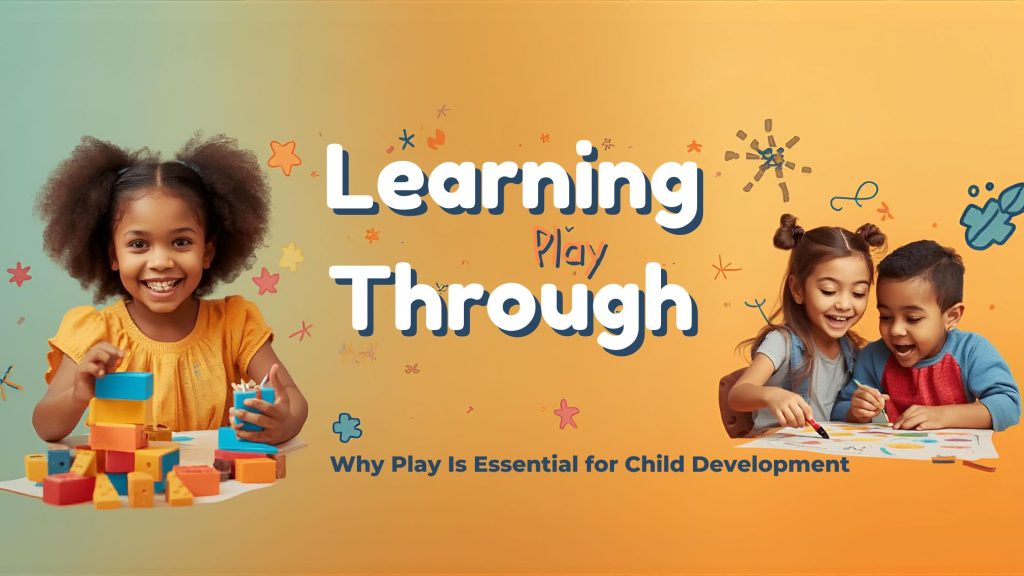
When we think of learning, we often imagine books, worksheets, or structured lessons. But for young children, one of the most powerful ways they learn is through play.
Play isn’t just fun — it’s a critical part of early childhood development. Through play, children explore the world around them, build essential skills, and develop confidence in a natural and joyful way.
What Is Learning Through Play?
Learning through play means allowing children to learn by engaging in activities that are enjoyable, hands-on, and age-appropriate. These activities may look simple, but they are packed with learning opportunities.
Examples include:
- Pretend play (playing house, shop, or school)
- Building with blocks or puzzles
- Drawing, painting, and crafts
- Outdoor play like running, climbing, or sandbox time
- Group play with other children
Each of these activities supports different areas of development.
How Play Supports Child Development
Cognitive Development
Play helps children think, solve problems, and make decisions. Building blocks teach balance and spatial awareness, while puzzles improve memory and concentration.
Language & Communication Skills
When children play together or engage in pretend play, they practice speaking, listening, and expressing their ideas. Storytelling and role-play help build vocabulary and communication confidence.
Social & Emotional Growth
Through play, children learn how to share, take turns, manage emotions, and work with others. These social skills are essential for school readiness and everyday life.
Independence & Confidence
When children choose how to play, they gain a sense of control and independence. Successfully completing a task — even a small one — builds self-esteem.
Creativity & Imagination
Play encourages children to imagine, create, and experiment. There are no “wrong answers” in play, which allows kids to think freely and creatively.
Why Play-Based Childcare Matters
High-quality childcare environments understand the importance of play-based learning. They create safe, nurturing spaces where children can explore, interact, and grow at their own pace.
When choosing childcare, parents may want to look for programs that:
- Encourage hands-on activities
- Balance structured routines with free play
- Support social interaction
- Value emotional well-being alongside academics
How ChildcareHub Supports Parents
At ChildcareHub, we believe informed parents make confident choices. That’s why we help families explore childcare options that support healthy development — including play-based learning approaches.
Whether you’re just starting your childcare search or comparing options, ChildcareHub is here to make the process simpler and less overwhelming.